BLOG DO WALDRYANO

Religiosidade • Escrita Criativa • Opinião

```
Mostrando postagens com marcador grammar. Mostrar todas as postagens

Homophones, they are everywhere

Olá leitores do Blog, deixo-vos uma sugestão para compreender os falsos amigos famosos em inglês, segue abaixo e observem na integra no site.

Are You Talking Aloud? Or Is Talking Allowed? Watch What You Write, to Make Sure it’s Right


Homophones, they are everywhere.

Words that look the same and/or sound the same can easily be confused. For example, if you invite people over and tell them to bring their palates/palettes, they won’t know whether they should expect to be drinking wine or painting!

And while this can lead to some funny misunderstandings amongst friends, in the business world it can cause problems.

First off, the use of incorrect words or misspellings looks sloppy and can decrease an individual’s confidence in your company. If a business cannot correctly proof their materials, should you really be trusting them with your credit card information?

Homophones—particularly when used incorrectly—can also confuse your audience and make it unclear as to what you are talking about. Do you have patients or do you have patience? The question might sound the same, but the meaning is completely different depending on how it is written.

When it comes to your important documents—such as marketing materials, email blasts, and newsletters, website copy, or company reports—absolutely never rely on spellcheck alone. Remember, it’s not an issue with spelling, it’s an issue with meaning.

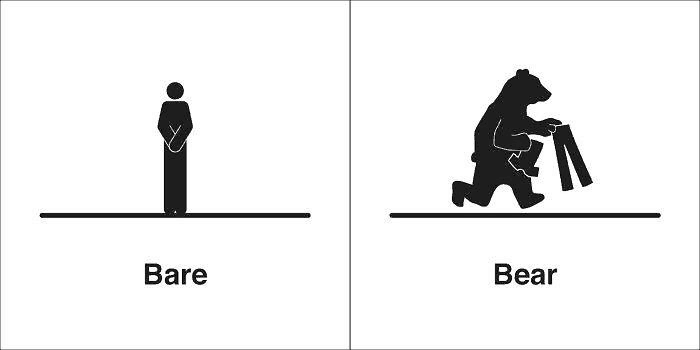
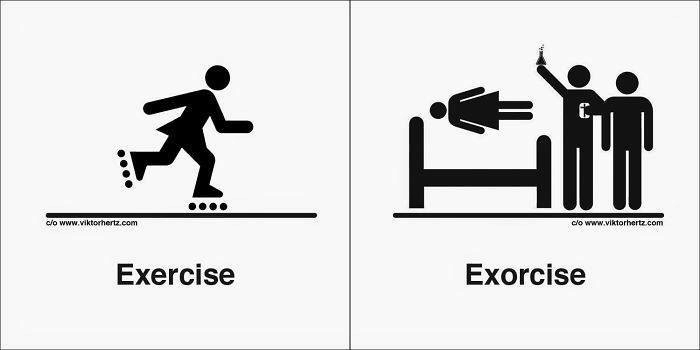
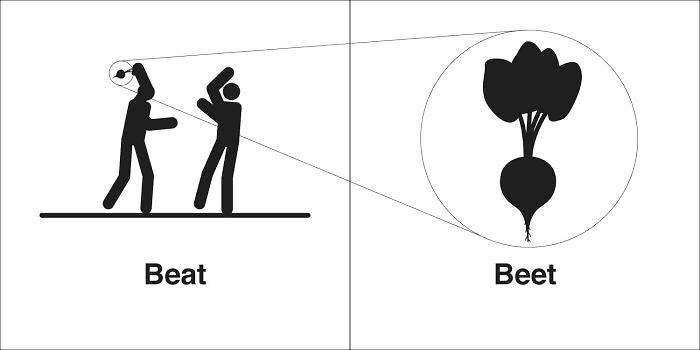
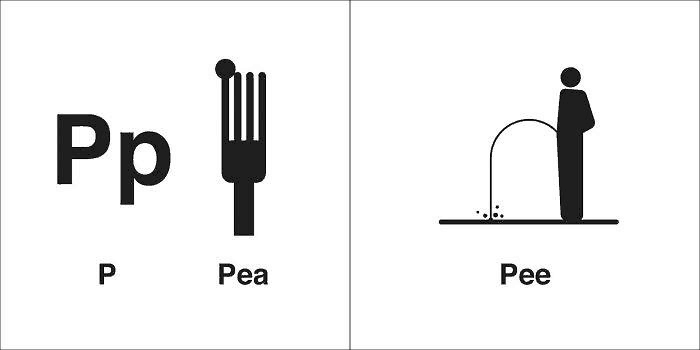
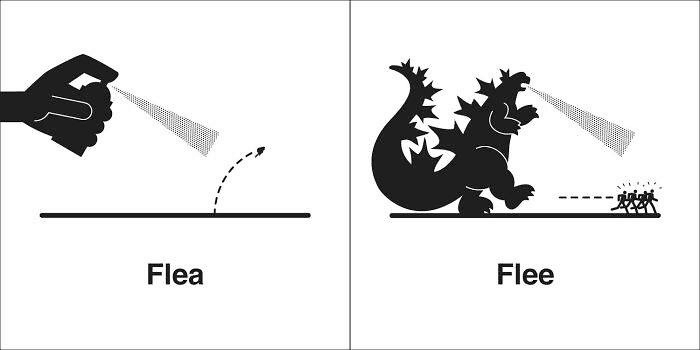
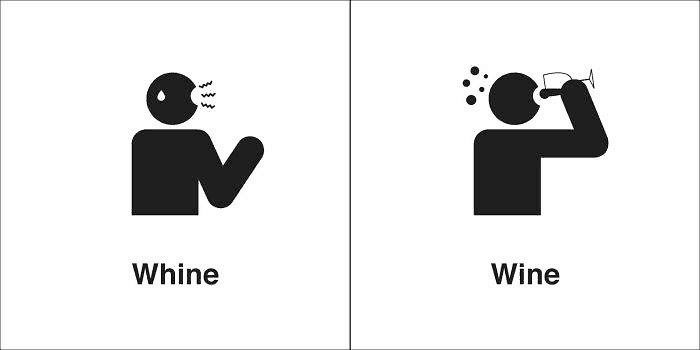
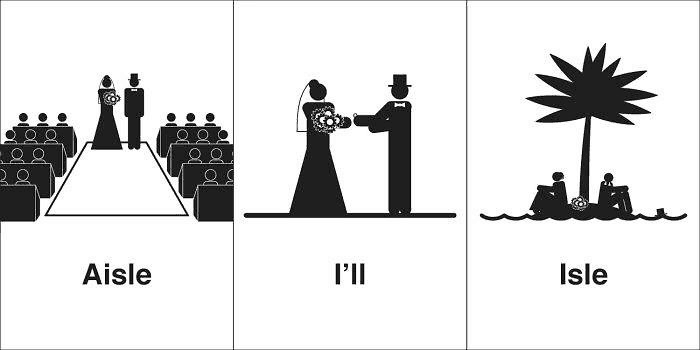
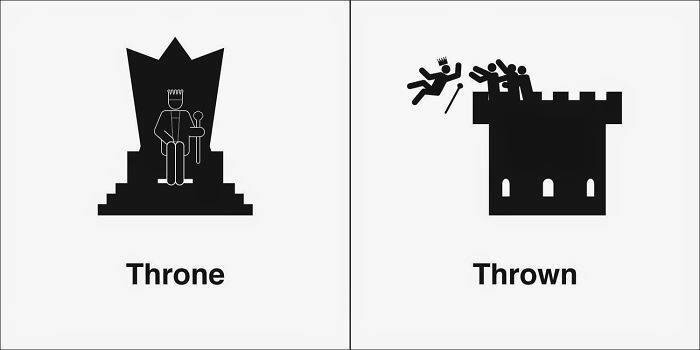
Check out the work below by artist Bruce Worden. It serves as a great visual example of these same-sounding words can have entirely different meanings.
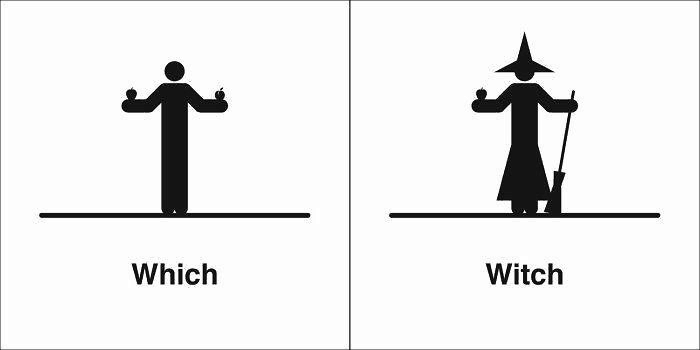
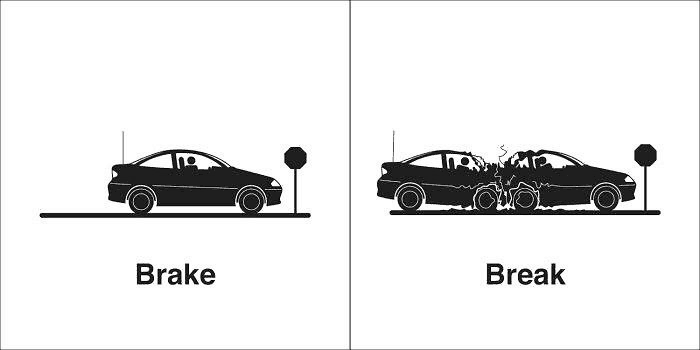
Are You Talking Aloud? Or Is Talking Allowed? Watch What You Write, to Make Sure it’s Right


Are You Talking Aloud? Or Is Talking Allowed? Watch What You Write, to Make Sure it’s Right


Are You Talking Aloud? Or Is Talking Allowed? Watch What You Write, to Make Sure it’s Right


Are You Talking Aloud? Or Is Talking Allowed? Watch What You Write, to Make Sure it’s Right


Are You Talking Aloud? Or Is Talking Allowed? Watch What You Write, to Make Sure it’s Right


Are You Talking Aloud? Or Is Talking Allowed? Watch What You Write, to Make Sure it’s Right


Are You Talking Aloud? Or Is Talking Allowed? Watch What You Write, to Make Sure it’s Right


Are You Talking Aloud? Or Is Talking Allowed? Watch What You Write, to Make Sure it’s Right


Are You Talking Aloud? Or Is Talking Allowed? Watch What You Write, to Make Sure it’s Right


Are You Talking Aloud? Or Is Talking Allowed? Watch What You Write, to Make Sure it’s Right

 Fonte: <https://www.websiteplanet.com/blog/talking-aloud-talking-allowed-watch-write-make-sure-right/>

Exclamation Point

Punctuation is a mark that makes a meaning of a sentence clear. Another common punctuation mark is the exclamation point. An exclamation point is most often used at the end of a sentence. It used to indicate a strong emotion or feeling.

Exclamation Point at the End of a Sentence

Most exclamation points are used at the end of a sentence. They are used to indicate a strong emotion or feeling.

  • I am so happy!
  • You make me so mad!
  • Get away from me!
  • Help me!

Exclamation Point after a Single Word

Sometimes a single word can express a strong emotion and be a complete thought.

  • Stop!
  • Go!
  • Run!

Exclamation Point within a Sentence

Sometimes exclamation points can appear in the middle of a sentence. When quoting a strong statement (direct speech), exclamation points can be placed within the sentence. Exclamation points are not used with indirect speech.

  • "I hate you!" she yelled.
  • "I am so excited!" he exclaimed.
  • "Run!" he shouted.
  • The coach yelled "Go!"

Interjections

Interjections are words that express some kind of emotion. They can be used as fillers. Interjections do not have a grammatical function in the sentence and are not related to the other parts of the sentence. If an interjection is omitted, the sentence still makes sense. It can stand alone.

When you are expressing a strong emotion, use an exclamation point (!). A comma (,) can be used for a weaker emotion.

Express a Feeling - Wow, Gee, Oops, Darn, Geez, Oh:

  • Ouch! That hurts.
  • Geez, I need a break.
  • Wow! What a beautiful dress!

Call Attention - Yo, Hey:

  • Yo, give me the ball.
  • Hey, I just wanted to talk to you about the previous incident.

Say Yes or No - Yes, No, Nope:

  • Yes, I will do it.
  • No, I am not going to go there.
  • Nope. That's not what I want.

Indicate a Pause - Well, Um, Hmm:

  • Well, what I meant was nothing like that.
  • Um, here is our proposal.
  • Hmm. You really need to be on a diet.

Demonstrative Pronouns

Here are four demonstratives: this, these, that, those. Demonstratives are used to state the distance of what the speaker is referring to.

"This", "that", "these", "those" are used when representing something specific. "This" and "that" represent a singular noun. "These" and "those" represent plural nouns.

Demonstrative Pronouns: This or These

"This" and "these" are used when referring to something close to the speaker. "This" represents a singular noun. "These" represents a plural noun.

  • This is my car.
  • This is a good book.
  • Is this too big for me?
  • Is this ok with you?
  • These are delicious.
  • These are very uncomfortable.
  • Are these mine?
  • Can these come apart?

Demonstrative Pronouns: That or Those

"That" and "those" are used when referring to something far from the speaker. "That" represents a singular noun. "Those" represents a plural noun.

  • That was built forty years ago.
  • That is my neighbor.
  • Is that dangerous?
  • Is that mine?
  • Those people are blocking traffic.
  • Those flowers are beautiful.
  • Are those reserved?
  • Are those expensive?

Demonstrative Adverbs

"Here" or "there" are often used in addition to "this", "that", "these", or "those". "This" and "these" are used with "here" to indicate that something is close to the speaker. "That" and "those" are used with "there" to indicate that something is away from the speaker. Oftentimes "there" is used as "over there" to further explain that the object they are referring to is far away from the speaker.

Demonstrative Adverbs: Here or There

  • This cup here is mine.
  • I designed this building here.
  • These kids here are in a lot of trouble.
  • Please clean up these toys here.
  • That car over there has not been moved in over a month.
  • Could you bring me that book over there?
  • Those people over there are having a party.
  • I wish those people over therewould calm down.

Simple Future

Simple future is used to refer to a later time. Simple future has two forms: "will + verb" and "be verb + going to + verb". They both refer to a specific time in the future.

Simple Future - Will

"Will" usually expresses a promise to do something or a voluntary action. Sentences are formed with "will + verb". You can turn the sentences into negative sentences by placing "not" between "will" and the verb.

  • Audrey will play softball next season.
  • Sophie will take Choir at school next year.
  • I will help him tomorrow.
  • They will build the shed this weekend.
  • We will join them on Saturday.
  • Audrey will not play softball next season.
  • Sophie will not take Choir at school next year.
  • I will not help him tomorrow.
  • They will not build the shed this weekend.
  • We will not join them on Saturday.

Simple Future - Yes/No Questions with Will

"Will" can also be used in questions.

  • Will Audrey play softball next season?
  • Will Sophie take Choir at school next year?
  • Will you help him tomorrow?
  • Will they build the shed this weekend?
  • Will we join them on Saturday?

Simple Future - Be Verbs + going to

"Be verb + going to" usually expresses a plan to do something. Sentences are formed with "be verb + going to + verb". You can turn sentences into negative sentences by placing "not" between the "be" verb and "going to".

  • Audrey is going to play softball next season.
  • Sophie is going to take Choir at school next year.
  • I am going to help him tomorrow.
  • They are going to build the shed this weekend.
  • We are going to join them on Saturday.
  • Audrey is not going to playsoftball next season.
  • Sophie is not going to take Choir at school next year.
  • I am not going to help him tomorrow.
  • They are not going to build the shed this weekend.
  • We are not going to join them on Saturday.

Simple Future - Yes/No questions with Be verbs + going to

"Be verb + going to + verb" can also be used in questions.

  • Is Audrey going to play softball next season?
  • Is Sophie going to take Choir at school next year?
  • Are you going to help him tomorrow?
  • Are they going to build the shed this weekend?
  • Are we going to join them on Saturday?

Simple Future - Predictions

Both forms of the simple future tenses can express a prediction about the future.

  • Audrey's softball team will winthe game.
  • Audrey's softball team is going to win the game.
  • She will be the chess champion.
  • She is going to be the chess champion.
  • He will win a Grammy for this song.
  • He is going to win a Grammy for this song.

Regular verbs

"Regular verbs" are verbs that change very little from their base form when turned into past tense or past participle form.

Past tense verbs and past participles indicate that an action has been completed. While verbs in past tense can stand on their own, verbs in past participle form cannot stand alone as a verb.

For "regular verbs", we only have to add "-d" or "-ed" to the end of the verb to turn it into past tense or past participle form. For "irregular verbs", there is no set pattern to turn it into past tense or past participle form. An "irregular verb" can look like an entirely different word.

Regular verbs add "-d" or "-ed" to the end of the verb to turn it into past tense or past participle form

Base VerbPast TensePast Participle
LearnLearnedLearned
CookCookedCooked
SolveSolvedSolved
AskAskedAsked
WatchWatchedWatched
ListenListenedListened
WashWashedWashed
BakeBakedBaked
LaughLaughedLaughed
PlantPlantedPlanted

Irregular verbs - No pattern when turning the verb into past tense or past participle form

Base VerbPast TensePast Participle
GrowGrewGrown
KnowKnewKnown
BeginBeganBegun
DrawDrewDrawn
DriveDroveDriven
FlyFlewFlown
GiveGaveGiven
SpeakSpokeSpoken
FreezeFrozeFrozen
SeeSawSeen

Be verbs past

"Be" verbs indicate a state of being. "Be" verbs in the past tense indicate that a state of being that has happened. They must match the subjects. "Be" verbs are "was" and "were". "Was" is used with "I", "he", "she", or "it". "Were" is used with "we", "they", and "you".

"Be" verbs - Past Tense

  • I was a student.
  • I was strong.
  • She was a teacher.
  • He was funny.
  • It was hot.
  • We were happy.
  • They were sad.
  • You were alone.

"Be" verbs in the past tense can be turned into negative sentences.

Negative sentences need "not" after the "be" verb.

  • I was not a student.
  • I was not strong.
  • She was not a teacher.
  • He was not funny.
  • It was not hot.
  • We were not happy.
  • They were not sad.
  • You were not a clown.

"Be" verbs in the past tense can be turned into questions.

The "be" verb comes first in these sentences. They always end with a question mark (?).

  • Was I wrong?
  • Was I strong?
  • Was she a teacher?
  • Was he funny?
  • Was it hot?
  • Were we happy?
  • Were they sad?
  • Were you a clown?

Verbs past tense

"Be" verbs indicate a state of being. "Be" verbs in the past tense indicate that a state of being that has happened. They must match the subjects. "Be" verbs are "was" and "were". "Was" is used with "I", "he", "she", or "it". "Were" is used with "we", "they", and "you".

"Be" verbs - Past Tense

  • I was a student.
  • I was strong.
  • She was a teacher.
  • He was funny.
  • It was hot.
  • We were happy.
  • They were sad.
  • You were alone.

"Be" verbs in the past tense can be turned into negative sentences.

Negative sentences need "not" after the "be" verb.

  • I was not a student.
  • I was not strong.
  • She was not a teacher.
  • He was not funny.
  • It was not hot.
  • We were not happy.
  • They were not sad.
  • You were not a clown.

"Be" verbs in the past tense can be turned into questions.

The "be" verb comes first in these sentences. They always end with a question mark (?).

  • Was I wrong?
  • Was I strong?
  • Was she a teacher?
  • Was he funny?
  • Was it hot?
  • Were we happy?
  • Were they sad?
  • Were you a clown?

Simple past

Simple past is used to express finished or completed actions.

Simple Past - Basic form

Add "-ed" to the verb.

VerbAdd "-ed"
  • Visit
  • Walk
  • Talk
  • Visited
  • Walked
  • Talked

For single-syllable verbs ending in a short vowel and a single consonant, double the final consonant.

VerbDouble ending consonant and add "-ed"
  • Slip
  • Drop
  • Cross
  • Slipped
  • Dropped
  • Crossed

For verbs that end in "-e", only add "-d".

VerbAdd "-d"
  • Dance
  • Live
  • Race
  • Danced
  • Lived
  • Raced

  • I visited my old school.
  • I walked to work.
  • He dropped his keys.
  • They crossed the street.
  • They lived in England before moving to America.
  • He raced on the track.

Simple Past - Additional forms

If the verb ends in a consonant + "y" (i.e. study), change the "y" to "i" and add "-ed". If the verb ends in a vowel + "y" (i.e. play), just add "-ed".

Consonant + "y" --> Consonant + "i" + "-ed"Vowel + "y" --> Vowel + "y" + "ed"
  • Study --> Studied
  • Try --> Tried
  • Dry --> Dried
  • Play --> Played
  • Stay --> Stayed
  • Pray --> Prayed

  • He studied English.
  • She dried her clothes.
  • They tried dancing.
  • She played soccer.
  • We stayed home.
  • He prayed before eating.

Simple present

Simple present is used to express repeated or unchanging actions. The action can be a habit, hobby, recurring event, emotion, or wish. Simple present is not used to express actions that are happening right now.

Simple Present - Basic Form

For verbs ending in consonants or "-e", just add "-s" to the end of the verb.

I, You, We, TheyHe, She, It
VerbVerb +s
  • Walk
  • Live
  • See
  • Speak
  • Play
  • Read
  • Walks
  • Lives
  • Sees
  • Speaks
  • Plays
  • Reads

  • I walk to school.
  • He walks to school.
  • We live in a house.
  • She lives in a house.
  • They see a dog.
  • The dog sees a bone.
  • I speak Spanish.
  • She speaks Spanish.
  • The children play in the park.
  • The child plays in the park.

Simple Present - Additional forms

For "He", "She" or "It" - If the verb ends in "-o", "-x", "-sh", "-ch", or "-ss", add "-es" to the end of the verb.

VerbVerb+ -es
  • Go
  • Watch
  • Miss
  • Fix
  • Wash
  • Goes
  • Watches
  • Misses
  • Fixes
  • Washes

  • He goes to school.
  • She watches TV.
  • Carol misses her mom.
  • Bill fixes the stove.
  • Joe washes his car.

Simple Present - Additional Forms

For "He", "She", or "It" - If the verb ends in a consonant + "-y" (i.e. study), change the "y" to "i" and add "-es". If the verb ends in a vowel + "-y" (i.e. play), just add "-s".

Consonant + y --> Consonant + i + esVowel + y --> Vowel + y + s
  • Study --> Studies
  • Try --> Tries
  • Dry-->Dries
  • Play --> Plays
  • Stay --> Stays
  • Buy --> Buys

  • He studies English.
  • She plays soccer.
  • The boy dries the dishes.
  • She buys candy.
  • He stays home.

Period ( . )

Punctuation is a mark that makes a meaning of a sentence clear. The most common punctuation mark is the period. A period is used to indicate the end of a sentence. It is used to make a statement.

Period at the End of a Sentence

A period is used at the end of a sentence. It is used to make a statement.

  • My name is Bill.
  • I am 24 years old.
  • I live in Seattle.
  • I am a teacher.

Period after a Single Word

Sometimes a single word can be a complete sentence.

  • Hello.
  • Good-bye.
  • Stop.
  • Go.

Period in Abbreviated Words

A period is used in abbreviated words or shortened words. Many words can be abbreviated. These are a few common examples.

Mister
Misses
Doctor
Sergeant
Mr.
Mrs.
Dr.
Sgt.
Street
Road
Avenue
Boulevard
St.
Rd.
Ave.
Blvd.
Monday
Tuesday
Wednesday
Thursday
Friday
Saturday
Sunday
Mon.
Tues.
Wed.
Thurs.
Fri.
Sat.
Sun.
January
February
March
April
May
June
July
August
September
October
November
December
Jan.
Feb.
Mar.
Apr.
May
Jun.
Jul.
Aug.
Sept.
Oct.
Nov.
Dec.

Period in Numbers

Periods used in numbers are called decimal points. Decimal points separate a whole number and a fraction of a whole number. It is used when referring to temperature and money.

The book is $10.99. ($10.99 = ten dollars and ninety-nine cents)
Normal body temperature is 98.6 Fahrenheit. (98.6 = ninety-eight point six)

Capitalization Rules

Capitalization means using a capital letter (for example, A instead of a).

Capitalization Rules

Always capitalize the following:

The first word in a sentence and the first word after a period

  • It is the first day of school.
  • He is my husband. His name is Phil. He is an engineer.

The first word in a quotation

  • She said, "They don't know what to do."
  • He asked, "When are we leaving?"

The pronoun I

  • This is where I was born.
  • Can I have a slice of cake?

The first letter of a proper noun (specific name)

  • My name is John Smith.
  • I was born in Brazil.
  • I went to Harvard University.
  • I drink Starbucks coffee.

The first letter of months, days, and holidays (but not seasons)

  • Today is December 5, 2014.
  • My dentist appointment is on Monday.
  • My favorite holiday is Christmas.
  • My favorite season is winter.

The first letter of nationalities, religions, races of people, and languages

  • I love to eat Chinese food.
  • I speak Spanish and German.
  • I believe in Christianity.
  • There are many Russian students at my school.

The first letter in a person's title

  • My doctor is Dr. Lopez.
  • Have you met Mrs. Lee?

Geographic areas: cities, states, countries, mountains, oceans, rivers, etc.

  • My favorite city is Boston.
  • I live in New York.
  • I was born in London, England.
  • We live near the Mississippi River.

The first letter of each major word in the title of a book, movie, article, etc.

  • Have you seen the movie Harry Potter?
  • Tolstoy's War and Peace is my favorite novel.

General Rule: Do not capitalize the word "the" before proper nouns unless "the" is part of an official title

  • We visited the Grand Canyon.
  • We have to fly over the Pacific Ocean.
  • The report came from The Associated Press.
  • My favorite book is The Great Gatsby,.

Coordinating Conjunctions

A conjunction joins words or groups of words in a sentence.

Coordinating Conjunctions

Connects words, phrases, or clauses that are independent or equal using and/or/but. Use "and" when you mean to say "in addition to". Use "or" to indicate a choice between two things. Use "but" to connect two different things that are not in agreement.

  • I bought apples and oranges at the store.
  • We are going to the zoo and the aquarium today.
  • I am not ready and I need more time.
  • Would you like coffee or tea?
  • Do you want a red one or a blue one?
  • Do you want to stay at the party or go home?
  • I am a night owl, but she is an early bird.
  • I want to see a movie, but I'm very tired.
  • I was angry, but I did not show it.

Coma (,)

Punctuation is a mark that makes a meaning of a sentence clear. One of the most common punctuation marks is the comma. A comma (,) is used within a sentence. It is used to separate parts of a sentence. It is also used when listing words.

Comma Used to Separate Clauses

A comma is used to separate clauses. Commas are often used in sentences that have coordinating conjunctions.

  • My friend is moving, so I'm going to help him pack.
  • I want to see a movie, but I'm very tired.
  • Unless you have a valid driver's license, you cannot rent a car.
  • After I leave the house, my dog jumps on the bed.


Comma Used to List Series of Words

A comma is used when listing a series of words adjectives, nouns, and verbs.

  • He is young, smart, and handsome.
  • I need to buy bread, potatoes, cheese, and carrots at the store.
  • The ballerina leaped, twirled, and landed on the ground perfectly.

Comma Used to Separate Clauses

Commas are used to separate nonrestrictive appositive nouns. A nonrestrictive appositive noun is separated by a comma or placed in between two commas.

  • My mom, Linda, is a chef.
  • I am meeting with the school principal, Mr. James.
  • Buddy, the Scottish terrier, is scared of cats.

Definitive article

The words "a", "an", and "the" are special adjectives called articles. Articles define nouns as either specific or unspecific. "The" is a definite article. Definite articles are used to refer to a specific noun or a noun that has been previously specified. They can be used before singular, plural, countable, and uncountable nouns. "The" is used before words that start with consonants or vowels. It does not matter what letter the word starts with.

Definite Articles - singular and plural nouns

Singular NounsPlural Nouns
  • Please close the door.
  • I am going to the storetoday.
  • The birdlanded on the roof.
  • Dinner is on the table.
  • The apples are sweet.
  • The customers are getting impatient.
  • Who ate all of the donuts?
  • The flowersare beautiful.

Definite Articles - countable and uncountable nouns

Countable NounsUncountable Nouns
  • Who moved the chairs?
  • The computer is broken.
  • The bottle is empty.
  • The balloonis deflating.
  • The wateris cold.
  • The meat is tough.
  • Smoke filled the air.
  • The woodis burning.

Indefinitive article

The words "a", "an", and "the" are special adjectives called articles. Articles define nouns as either specific or unspecific. "A" and "an" are indefinite articles. Indefinite articles are used before singular nouns and countable nouns that are not specified. You cannot use "a" or "an" before plural nouns or uncountable nouns.

"A" is used before nouns starting with consonants letters (letters other than a, e, i, o, u). "A" is also used with words that sound like they start with a consonant even if they start with a vowel (university, unit, one). "An" is used before nouns starting with vowels (a, e, i, o, u) or with a silent h (hour, honor).

Indefinite Articles - singular nouns

Consonants letters (letters other than a, e, i, o, u)Vowels (a, e, i, o, u)
  • A banana
  • A car
  • A helicopter
  • A lamp
  • A woman
  • A man
  • A dog
  • A tree
  • A sandwich
  • A robot
  • A university
  • A unit
  • An apple
  • An animal
  • An egg
  • An elephant
  • An igloo
  • An ice cream cone
  • An ostrich
  • An onion
  • An umbrella
  • An ugly sweater
  • An hour
  • An honor